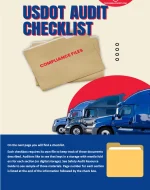
New Entrant Safety Audit Step-By-Step:
Starting your trucking company is exciting — but one of the first major compliance milestones you’ll face is the FMCSA Safety Audit, often called the New Entrant Audit. This comprehensive guide, based on a 6-part video series, breaks down everything you need to know to pass your audit with confidence. From understanding the timeline to preparing your documents, we’ll cover all the essential FMCSA safety audit requirements to ensure you maintain your operating authority and build a strong foundation for your business.
DOT Safety Audit Requirements
The first step in preparing for your new entrant audit is understanding the required documents. The audit is conducted within the first 3 to 12 months of obtaining your authority, and you’ll receive an email with a 20-day deadline to submit all necessary paperwork. This initial phase is crucial, as it sets the stage for the entire audit process.
"Okay, so in this section we're going over your new entrant audit checklist. So this is conducted within the first three to 12 months of obtaining your authority. These are the items that they're going to require... you'll be receiving an email, and in this email, it's going to say, hey, you have 20 days to send us all these items."
To streamline this process, it’s highly recommended to use templates for your driver and vehicle lists. These can be simple Excel or PDF files that you can easily fill out and submit. The key is to have all your information organized and ready to go before you receive the official audit notification.
Driver-Related Documents
- Driver List – Names, license numbers, birth dates, and hire dates.
- Driver’s License Copies – Front + back, valid for the operating class.
- Medical Examiner’s Certificates – Must be current and match the driver file.
- Motor Vehicle Records (MVRs) – Pulled annually from each state of licensure.
- Driver Record of Duty Status (RODS) – 30 days of logs or ELD data including one interstate trip.
Vehicle Documentation
- Vehicle List – Unit #, year, make, VIN, and plate number.
- Annual DOT Inspections – Current inspection reports for truck & trailer.
- Proof of Insurance (MCS-90) – Supplied by your insurance agent.
- Maintenance Files – Evidence of repairs or preventive maintenance schedules.
Safety & Compliance Records
- Drug & Alcohol Testing Program
- Pre-employment drug test results
- Proof of random testing enrollment
- Consortium enrollment agreement or payment receipt
- Accident Register – Record of any crashes with date, location, injuries, tow info, police report, and hazmat involvement.
- Hazmat Shipping Papers – For carriers transporting regulated materials.
Important Things to Know Before Your Audit
Your first 18 months of operation are a probationary period. During this time, your U.S. DOT number is closely monitored by the FMCSA. It’s important to understand that you’re considered a “new company” for the first two years, which impacts everything from insurance rates to broker relationships.
"So your U.S. DOT, when you start off, it's actually being monitored for the first 18 months. You're actually considered to most people a new company for the first two years... you're basically in this probationary period for the first 18 months."
If you fail to complete the safety audit, your DOT authority will be revoked, and you’ll have to wait a minimum of 30 days to reinstate it. This waiting period is non-negotiable, even if you fix the issues immediately. After 18 months, your DOT number becomes permanent, and you can start building your CSA (Compliance, Safety, Accountability) score. This score is a critical factor for shippers, brokers, and insurance companies when evaluating your company’s safety performance.
Audit Timeline and Monitoring Period
| Stage | Timeframe | What Happens |
|---|---|---|
Initial Registration | Month 0 | USDOT & MC numbers issued |
Monitoring Period | 0–18 months | FMCSA tracks compliance data |
Safety Audit Notice | Usually months 3–12 | Audit notification email sent |
Submission Deadline | 20 days from notice | Upload required documents |
Review & Decision | Within 45 days | FMCSA notifies pass/fail |
Permanent Authority | After 18 months | DOT transitions to permanent status and begins CSA scoring |
Failing to complete the audit automatically places your DOT number out of service. Even if you fix the issue quickly, a minimum 30-day suspension still applies before reinstatement.
Top Reasons Carriers Fail the Safety Audit
Although the process is straightforward, many carriers fail for simple reasons:
- Missed 20-Day Deadline – Documents not uploaded on time.
- No Drug & Alcohol Consortium Enrollment – Required before anyone drives.
- Missing or Expired Medical Cards – Disqualified driver documentation.
- Incomplete Driver Qualification Files – Missing MVRs or employment history.
- No Proof of Insurance on File (MCS-90) – Must match your active policy.
Remember: compliance isn’t optional. When you applied for your DOT Number, you certified that you would follow these safety rules.
What Happens If You Fail Your Audit
Failing your audit isn’t the end of the road, but it does require immediate action. You’ll need to submit a Corrective Action Plan (CAP), and your audit representative will guide you on the necessary steps to fix the identified problems. However, the best approach is to avoid failure altogether by having your compliance files in order from day one.
"You won't fail your audit if you already have all your compliance files in order and you guys this isn't a case of whether you want to do the compliance files or not you have to do it... if you don't have it they can come and revoke your authority."
The top reasons for failing a new entrant audit are surprisingly simple:
- Not submitting documents within the 20-day window.
- Not being enrolled in a drug and alcohol consortium program.
- Not having a correct CDL or medical card for drivers.
These are basic compliance requirements that every new trucking company must meet. Procrastination or oversight in these areas can lead to a failed audit and a 30-day suspension of your operating authority.
DOT Compliance Services
DOT compliance services exist to help companies, from brand-new entrants to established fleets, manage these safety and administrative requirements. These services help you establish the basic safety systems required to pass your audit and avoid fines or costly shutdowns.
Beyond the initial audit, compliance services can manage your ongoing safety operations. Key services often include:
- Driver Qualification (DQ) File Management: This is a primary service where a provider will create, convert, and manage all your driver files in a digital, audit-ready format. The system actively monitors files for missing or incomplete documents and sends alerts for expiring items like medical cards and MVRs.
- Drug & Alcohol Consortium Management: As mentioned, failure to enroll in a D&A program leads to audit failure. A compliance service acts as your Consortium/Third-Party Administrator (C/TPA). They manage your pre-employment testing, run your random testing pool, and handle all your FMCSA Clearinghouse queries. This is mandatory for owner-operators and companies with only one driver.
- Vehicle Compliance: This includes managing your vehicle maintenance records, tracking annual DOT inspections, and helping with ELD management.
- Authority and Licensing: Many services also assist with the initial company setup, including filing for your USDOT and MC numbers, process agent (BOC-3) filing, and managing IFTA/IRP registrations.
Required Documents Breakdown (Part 1)
This section delves into the specifics of the first set of required documents. Having these prepared in advance will make the submission process much smoother.
- Driver’s List: This should include the driver’s full name, license number, date of birth, date of hire, and license state.
- Vehicle List: This should include the unit number, make, year, plate number, and VIN for each vehicle.
- Proof of Insurance: You’ll need to submit your MCS-90 form, which you can get from your insurance agent.
- Driver’s Medical Card: A copy of each driver’s valid medical certificate is required.
- Motor Vehicle Record (MVR): You’ll need to provide a recent MVR for each driver.
- Driver’s License: A copy of the front and back of each driver’s license is necessary.
- Record of Duty Status (RODS): You must submit 30 consecutive days of logs for one driver, including supporting documents like toll and fuel receipts. If you use an ELD (Electronic Logging Device), you can simply sync it with the FMCSA, which is a much easier process.
"If you have an ELD device, just connect with FMCSA and they'll sync all your documents together. So it's one or the other. If you don't use ELD, then you'll need to submit the last 30 days of record of duty status and you're going to need to submit basically your logbook."
Required Documents Breakdown (Part 2)
Continuing with the document requirements, this section covers vehicle inspections and drug and alcohol testing records.
- Vehicle Inspection: You must provide a DOT vehicle inspection report for your truck and trailer. This is an annual requirement and is essential for ensuring your equipment is safe for the road.
- Drug and Alcohol Testing Records: This is a critical component of your safety program. You’ll need to provide:
- Pre-employment drug test results for at least one driver.
- Proof of enrollment in a random testing program.
- A list of all drivers in the program.
- Records of any positive tests from your consortium program.
"Your drug and alcohol consortium program will provide all of this for you, so you will have it. Make sure you sign up with them right away because nobody should be stepping in that truck unless this is in place."
Proof of enrollment can be a signed contract, a receipt of payment, or a letter from your third-party administrator (TPA).
DOT Audit Services
While ongoing compliance services manage your day-to-day safety programs, DOT audit services are specialized, event-focused services designed to help you prepare for, manage, and respond to an official FMCSA audit.
The best time to assess your fleet’s safety performance is before the FMCSA does. Audit services are designed to proactively identify compliance gaps and minimize your risk of fines, downgraded safety ratings, or out-of-service orders. Audits are triggered from your USDOT CSA Safety Score that monitors the safety health of your business and flags DOT when it starts becoming unsafe.
Key audit services generally fall into three categories:
1. Mock Audits and Assessments A mock audit is a comprehensive, proactive review of your operations conducted exactly like a real FMCSA audit. Consultants, sometimes former DOT auditors themselves, will perform a deep dive into your records. This includes:
- Driver Qualification files
- Hours of Service logs
- Vehicle Maintenance records
- Drug and Alcohol testing files
- Accident records
The goal is to provide a snapshot of your company’s current risk exposure and discover any deficiencies, potential fines, or rating failures before they are found by an official investigator.
2. Audit Representation and Support When you receive a notice for a New Entrant Safety Audit or a full Compliance Review, audit support services can provide one-on-one assistance before and during the process. This can include “DOT Audit Representation”, where an expert advises you during the investigation to ensure only valid violations are recorded and to help you navigate the process.
3. Corrective Action Plan (CAP) Assistance If your company fails a safety audit and receives a “Conditional” or “Unsatisfactory” rating, you must submit a formal Corrective Action Plan (CAP) to the FMCSA. This written response must explain the root cause of the violations and detail the actions you will take to prevent them from happening again. This is a non-negotiable step to keep your authority. Audit services specialize in writing and submitting these plans to ensure they are accepted by the FMCSA, helping you avoid a shutdown and get your company back on the road.
Final Requirements and Upload Process
The final set of documents includes your accident register and any hazmat shipping papers. You’ll also learn how to upload everything to the FMCSA portal.
- Accident Register: If you’ve had any accidents, you’ll need to provide a detailed list with information such as the date, time, location, number of injuries or fatalities, and whether any vehicles were towed. If you’ve had no accidents, simply state that on the form.
- Hazmat Shipping Papers: If you transport hazardous materials, you must retain and submit shipping papers for each type of hazmat transported within the last 30 days.
Once you have all your documents, you’ll receive an email with a link to the new entrant audit site. You’ll log in with your USDOT and PIN number, and then you can upload each document individually. For your ELD, you’ll enter your provider’s specific code to sync your records.
"Hit submit, and right when you get inside, it'll have those documents listed out, driver's license. Click on the right-hand side, and you hit upload, upload the driver's license... and you just continue moving forward all the way down."
After submitting everything, you’ll receive a pass or fail notification within 45 days. By following the steps in this guide and ensuring your compliance files are in order, you’ll be well prepared to pass your new entrant safety audit and continue on the road to success.