Understanding USDOT and mc number cost helps new trucking businesses plan their startup budget, avoid delays during registration, and stay compliant with federal requirements. Whether you are preparing to launch as an owner-operator or building a small fleet, knowing what you must pay for and how each step works can save time and frustration. FMCSA uses these identifiers to track safety, confirm operating authority, and verify financial responsibility, which makes correct registration central to starting your business. With the right information and reliable support, you can move through the registration process smoothly and begin hauling with confidence.
Why USDOT and MC Numbers Matter for Your Transportation Business
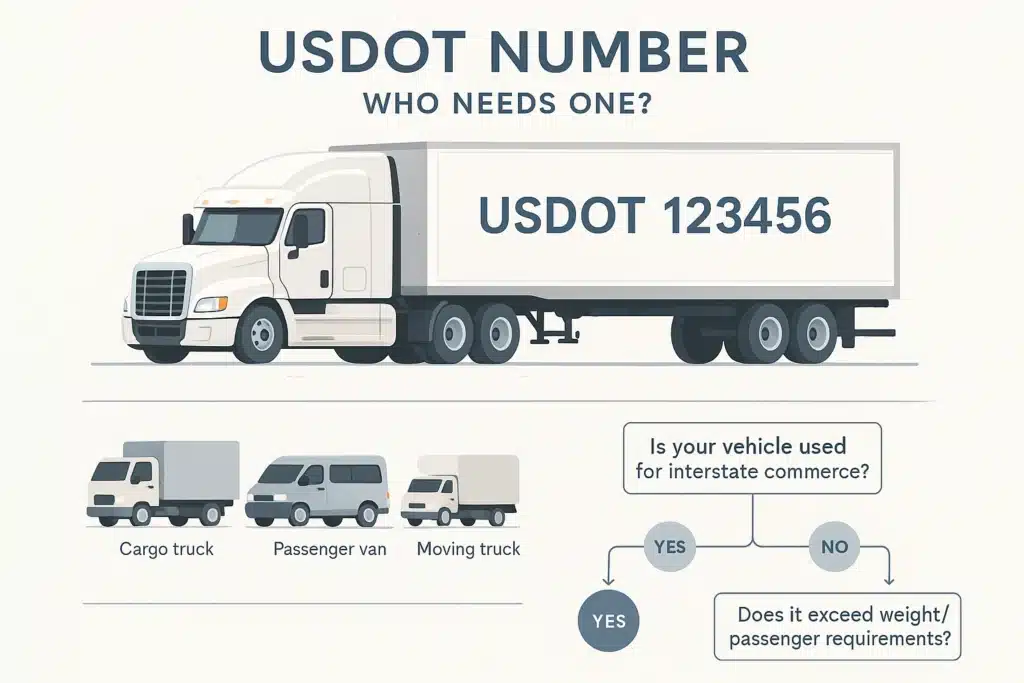
A USDOT number and an MC number serve two different but equally important functions in federal transportation compliance. A USDOT number connects your business to FMCSA’s safety monitoring system. It tracks inspections, compliance audits, and operational details tied to the vehicles you operate. Any motor carrier that meets FMCSA weight limits, transports passengers, handles hazardous materials, or operates across state lines must have a USDOT number before beginning service.
The MC number serves a different purpose. It grants operating authority for transporting regulated commodities for hire across state lines. Carriers, brokers, and logistics businesses rely on this authority to secure loads, access load boards, and work with shippers who require proof of compliance. Without an active MC number, a carrier cannot legally transport freight for hire across state borders.
Understanding how these identifiers function helps you avoid confusion and prevents gaps in compliance. Many new trucking businesses start by obtaining only a USDOT number and later discover they need an MC number as well. Others require both from day one. Truckers Authority helps new operators determine which identifiers apply to their business model and prepares them for each requirement so their registration proceeds without issues.
What Triggers the Need for a USDOT Number
FMCSA requires a USDOT number when you operate any of the following:
- A commercial vehicle weighing 10,001 pounds or more
- A vehicle transporting hazardous materials requiring placards
- A vehicle designed to transport passengers for compensation
- A commercial vehicle operating in interstate commerce
Once issued, the number becomes part of your business identity and must be displayed clearly on all qualifying vehicles.
The Difference Between USDOT Requirements and MC Authority
While the USDOT number supports safety oversight, the MC number reflects your operating authority. These identifiers work together to show federal agencies, shippers, and brokers that you operate legally and responsibly.
A DOT number tracks:
- Safety compliance
- Driver and vehicle inspections
- Crash history
- Compliance reviews
An MC number confirms:
- Your business operates as a for-hire carrier
- You meet federal insurance requirements
- You comply with FMCSA financial responsibility standards
Carriers need both when transporting loads belonging to others for compensation across state lines. Brokers also require an MC number, though they do not need a USDOT number unless they operate commercial vehicles.
Understanding the difference helps new operators avoid registration setbacks. Failing to obtain the correct number can result in penalties and delays in launching operations.
Why Both Identifiers Matter for New Operators
Carriers often face challenges when determining which numbers they must secure. Some find that a USDOT number alone does not allow them to book loads. Others realize too late that insurance filings must match their MC authority requirements. Having both numbers, when required, creates a complete compliance profile. Truckers Authority helps new operators review their business plans, freight types, and routes to determine which identifiers they need before filing.
Breaking Down USDOT Costs and MC Number Costs
Understanding the fees associated with operating authority helps trucking businesses budget properly. While some parts of the registration process are free, others require federal payment or service fees. Knowing what to expect ensures there are no financial surprises during setup.
USDOT Number Cost
The USDOT number itself does not have a federal filing fee. FMCSA assigns the number at no charge when you complete your initial registration. However, carriers should budget for compliance requirements related to safety, insurance, and operational documentation, as these responsibilities begin once the number is active.
MC Number Cost
An MC number does include a federal fee. FMCSA charges:
$300 per authority type
This fee applies when you file for operating authority through the Unified Registration System. If your business needs more than one type of authority, you pay for each separately.
Carriers should also be aware of additional costs that may arise during the application process:
- Insurance filings
- State-level fees
- BOC-3 process agent filings
- Optional filing service support
- Compliance and safety program setup
While the MC application fee is fixed, the total cost of becoming fully compliant varies depending on your business model and support needs.
Truckers Authority helps new carriers understand their true startup costs by reviewing insurance requirements, authority types, and state registration obligations.
Steps to Apply for Operating Authority and Understand Total Number Costs
Applying for your USDOT and MC numbers requires moving through several steps in the proper order. Each step contributes to your total cost and ensures FMCSA has the records needed to activate your authority.
Step 1: Prepare Business Information
You will need accurate details for:
- Legal business name
- Physical business address
- Contact information
- Ownership information
- Vehicle details (for carriers)
- Cargo types
Accuracy matters, because mismatched records can delay registration and add unnecessary expense.
Step 2: Apply for a USDOT Number
You must complete your USDOT application through FMCSA’s Unified Registration System. Once assigned, your DOT number becomes your safety identifier. Display it on all qualifying vehicles. Even though the number is free, it comes with ongoing responsibilities, including insurance requirements, safety audits, and compliance reviews.
Step 3: Apply for an MC Number
After obtaining your USDOT number, you can apply for your MC authority. This step requires a $300 fee per authority type. The MC application outlines your cargo types, operation classification, and business structure.
Step 4: Submit Insurance and Financial Responsibility Filings
Carriers must meet federal liability insurance minimums. Brokers must maintain a financial guarantee in the form of a bond or trust. Insurance companies and bond providers must submit these filings directly to FMCSA.
Step 5: File Your BOC-3
Carriers and brokers must designate process agents. The BOC-3 filing is required before your authority becomes active. Some businesses choose professional filing services to avoid errors.
Step 6: FMCSA Reviews Your Application
Once your filings and payment are complete, FMCSA reviews the application. When approved, your authority becomes active and your business can begin booking freight.
Understanding each step helps you estimate your total costs and prepare your business for launch. Truckers Authority provides support throughout this timeline to help carriers stay organized and avoid costly mistakes.
Cost Factors When Reactivating Your MC Number
Reactivating your MC number often costs more than most carriers expect because several compliance steps must be completed before authority can be restored. Your MCS150 filing plays a major role in what you will pay since the FMCSA requires an updated MCS150 if your last update is more than 24 months old. There are also hidden financial losses that come from having your authority inactive because your insurance is no longer continuous. Carriers with insurance lapses are viewed as higher risk, which can increase premiums once coverage is reinstated. Here are the main cost factors to consider:
- You must update or file a new MCS150 if your last update is older than 24 months
- If your USDOT status is out of service, you may need additional filings before reactivation
- An inactive MC number triggers an insurance lapse, which leads to higher premiums
- Carriers may face reinstatement fees, insurance binding costs, and additional compliance steps
- Lost time off the road results in revenue loss while waiting for approval and insurance processing
How Truckers Authority Makes USDOT and MC Number Registration Easier
The registration process for USDOT and MC numbers can feel overwhelming for new trucking businesses. Missteps such as inaccurate filings, mismatched business records, or incomplete insurance submissions can slow down approval. Truckers Authority offers clear, reliable support to help carriers navigate each requirement.
Our team reviews your business information, verifies accuracy, and ensures applications meet federal standards. We explain insurance requirements and help coordinate filings with your provider. We assist with BOC-3 filings and answer questions about your authority type. By helping you get every detail right, we make sure your registration stays on track.
Carriers and brokers who receive proper support save time, avoid delays, and move into revenue-generating operations faster. Truckers Authority is committed to helping new transportation businesses launch with confidence, stay compliant, and grow successfully.
If you want help applying for your USDOT or MC number, understanding your total costs, or preparing your business for authority approval, reach out to the Truckers Authority team today. You will receive clear guidance and dependable support during every step of your setup.