Understanding how to get a mc number is one of the first priorities for anyone starting a trucking business or planning to operate as a for-hire carrier in interstate commerce. The process involves several steps through the Federal Motor Carrier Safety Administration (FMCSA), each with specific requirements that must be completed before your authority becomes active. New trucking companies, independent owner-operators, and freight brokers all rely on accurate filings, proper insurance, and organized documentation to move through registration without delays. This draft gives you a clear outline of what to prepare, how to navigate federal forms, and how Truckers Authority supports new businesses with dependable guidance from start to finish.
Understanding What an MC Number Does for Your Business
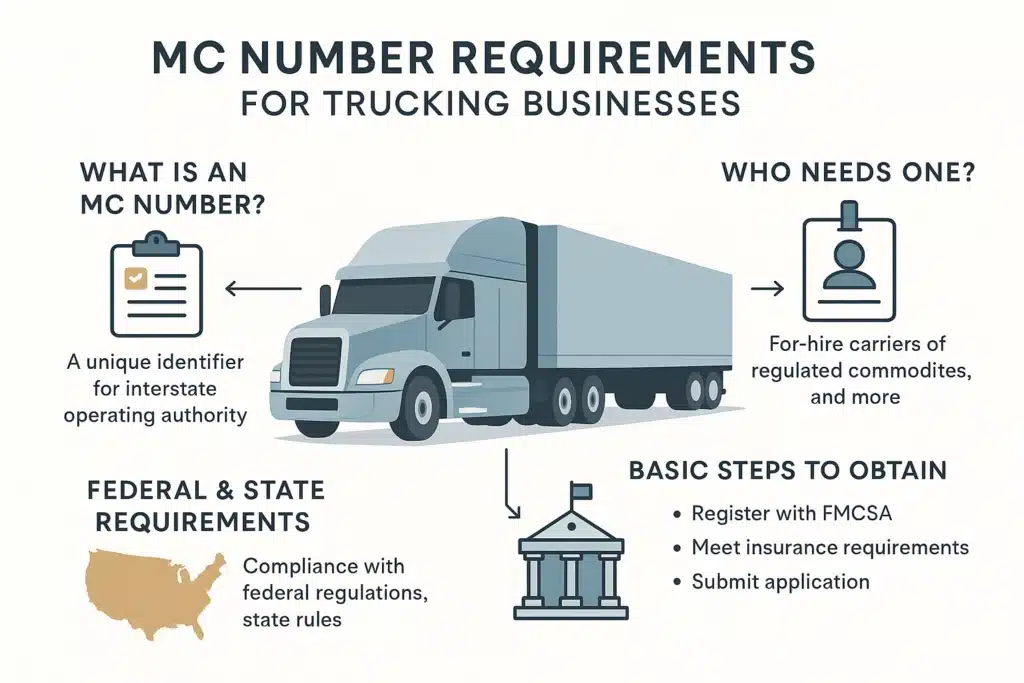
An MC number is a federal identifier issued by FMCSA to carriers and brokers that participate in interstate commerce. It represents your operating authority and signals to shippers, load boards, and business partners that you are legally permitted to transport regulated freight as a for-hire carrier. Your MC number also connects your business to your USDOT number, allowing FMCSA to track safety, compliance, and insurance accuracy.
Carriers need operating authority if they plan to move regulated commodities between states for compensation. Brokers need authority if they arrange freight transportation. Both groups must meet FMCSA requirements before their authority becomes active. Having the correct operating authority is often necessary for booking loads, passing compliance checks, and working with professional freight partners.
A new motor carrier or broker must decide which authority type matches their intended business operations. Carriers typically apply for for-hire property authority, while brokers apply for broker authority. Selecting the right authority type ensures that your insurance, documentation, and financial filings align with federal regulations. Truckers Authority helps applicants choose their correct authority and prepare each requirement so no step is overlooked.
Carrier vs. Broker Requirements
Carriers must submit business information, safety details, cargo types, and liability insurance that meets federal minimums. Brokers do not operate trucks but must maintain a surety bond or trust fund that provides financial protection for carriers and shippers. Both must designate process agents to receive legal documents in every state where they operate.
Understanding these differences is important for first-time applicants so their filings remain accurate throughout the registration process.
Steps to Apply for Operating Authority Through FMCSA
Applying for operating authority follows a structured process inside the FMCSA Unified Registration System (URS). Applicants must complete each step in the correct order and verify that all details match across documents.
Step 1: Obtain a USDOT Number
Most applicants need a USDOT number before applying for authority. This number tracks safety performance, inspections, and compliance information for your company. Business names, addresses, and contact information must match exactly across all filings. Any mismatched details can delay processing and create additional review steps.
Step 2: File for Operating Authority
Once you have a USDOT number, the next step is submitting your authority application. You must provide:
- Legal business name
- Physical business address
- Employer Identification Number
- Ownership details
- Operating classification
- Cargo types
- Contact information
- Payment for the authority fee
Carriers select the for-hire authority type that reflects the freight they plan to move. Brokers select broker authority. This application triggers the federal filing fee and begins the FMCSA review process. Truckers Authority double-checks these forms and ensures information is consistent so applicants avoid errors that could slow down approval.
Step 3: Submit Insurance Filings
FMCSA requires proof of financial responsibility before activating your authority. For carriers, this means filing liability insurance that meets federal minimums. Insurance companies must file the required forms directly with FMCSA. Your business name and address must match the information submitted in your application.
For general freight carriers, liability requirements start at $750,000, though certain cargo types require higher limits. Cargo insurance requirements vary based on product categories and business structure.
Step 4: File Form BOC-3
All carriers and brokers must designate process agents in each state where they operate. These agents accept legal documents on your behalf. You complete this requirement through the BOC-3 form. Truckers Authority works with carriers and brokers to file this form properly, ensuring no details are missing.
Step 5: FMCSA Review and Authority Activation
After insurance filings and the BOC-3 are submitted, FMCSA reviews your application. Once approved, your operating authority becomes active. At this point, you can begin booking freight, connecting with brokers, and building your transportation business.
Insurance, Financial Responsibility, and Documentation Requirements
Accurate insurance filings and financial documentation are essential for activating operating authority. FMCSA will not approve your MC number until these requirements are satisfied.
Insurance Requirements for Carriers
Carriers must hold liability insurance that aligns with the cargo they haul. Insurance providers submit the required forms to FMCSA. The most common requirements include:
- Liability coverage based on freight type
- Cargo insurance, depending on business operations
- Accurate business information for all filings
Insurance must match the business name and address filed through URS. Any inconsistencies can delay authority activation. Truckers Authority coordinates with insurers to ensure your coverage is filed correctly and your authority remains on track.
Financial Requirements for Brokers
Brokers must secure a $75,000 surety bond or trust fund. This financial guarantee protects carriers and shippers and must be kept active throughout your authority period. The bond must match your business details exactly as they appear in URS. Truckers Authority assists new brokers by connecting them with trusted bond providers and ensuring the filing process is completed accurately.
Documentation Checklist for Applicants
Applicants should have the following items ready before they begin the authority application:
- Legal business name
- Employer Identification Number
- Driver’s license for identity verification
- Vehicle information (for carriers)
- Cargo details
- Insurance policy details
- Brokerage bond information (for brokers)
- Payment method for FMCSA filing fees
Preparing these items early helps avoid processing delays and supports a smoother registration experience.
Selecting a Process Agent and Meeting Federal Compliance Standards
Process agents serve an important role in maintaining compliance. Each applicant must designate a process agent in every state where they operate. These agents accept legal notices and compliance communications on behalf of the business. FMCSA requires the BOC-3 filing to document these designations.
Truckers Authority helps new carriers and brokers select reputable process agents and file the BOC-3 correctly. Filing errors can delay your authority or cause compliance problems later.
Along with process agent requirements, carriers and brokers must maintain accurate business information through the FMCSA portal. This includes updates to addresses, company structure, insurance providers, or ownership details. Keeping records current prevents disruptions in authority status and supports long-term business growth.
Carriers must also monitor insurance renewals, while brokers must ensure their bond or trust fund remains active. FMCSA may suspend authority for any lapse in financial responsibility.
How Truckers Authority Supports You Through the MC Number Process
Truckers Authority provides practical support for new applicants who want a smoother, clearer path to operating authority. The process can feel overwhelming for first-time carriers or brokers, especially when managing deadlines, insurance filings, and federal forms. Our team reviews documents for accuracy, explains each step of the process in simple terms, and helps you stay organized through the entire application.
New trucking businesses often encounter delays from missing information, mismatched business records, or incomplete paperwork. Truckers Authority works to prevent those issues by guiding applicants through preparation, registration, insurance filings, and BOC-3 documentation. Whether you are building a trucking company or launching a freight brokerage, having a knowledgeable partner reduces stress and helps you reach active authority sooner.
If you need support applying for your authority, updating your existing filings, or understanding FMCSA requirements, reach out to Truckers Authority. Our team offers friendly guidance, clear answers, and reliable service for new and growing transportation businesses.